

Conflict
Every good story needs it, including the one you're living.

(If you prefer to listen, press play above!)
Hello, and welcome to Character Is Destiny!
Stories are one of humanity’s oldest technologies. We invented them to better understand ourselves and the world around us, rehearse difficult experiences, pass along knowledge and wisdom, imagine better futures, and so much more.
I spent the past thirty years as a writer studying this technology and building up the tools in my dramatist’s toolkit. Along the way, I started using those same tools to shape the narrative of my life. Now, I’m sharing them with you because I think anybody can use them to live a better story. This week, I’m talking about:
CONFLICT
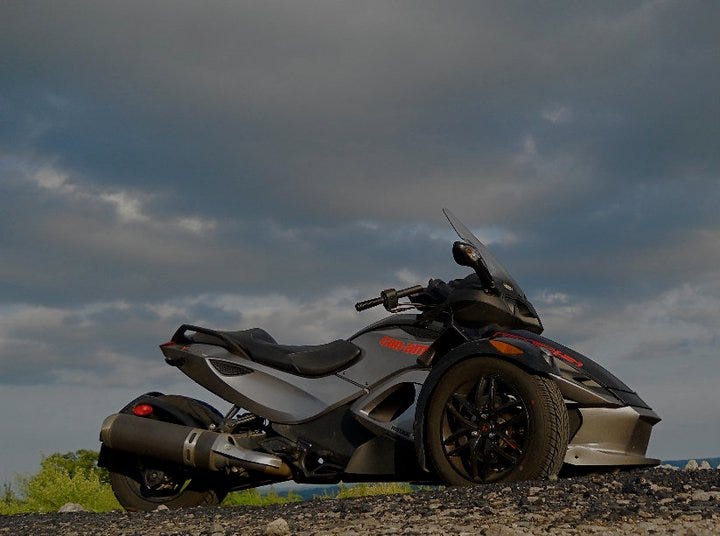
In April of 2011, I won a contest to be a brand ambassador for a three-wheeled motorcycle called the Can-Am Spyder. The prize: a brand new Spyder, to keep, and a cash stipend to fund your adventures.
For my entry, I wrote a 200 word article about my travel philosophy, that you have to get out of your comfort zone and be open to wherever the road wants to take you.
The marketing rep in charge of the campaign told me they were planning a three-day media event in Manhattan Beach, where the other new ambassador and I would meet the rest of The Spyder 5, be presented with our Spyders, and go on some iconic rides. When the event was over, they would put our Spyders on trucks and ship them home.
I said, “Can I just… ride it back?”
There was a long pause. “… Are you sure you wanna do that?”
I was not.
The longest ride I’d ever done to that point was 350 miles round trip. With as much confidence as I could muster, I said, “The whole point is to have adventures, right?”
Cut to Manhattan Beach. I met the company reps, a camera crew, and my fellow Spyder 5 members. We did the rides, had a blast, shot some great footage.
When it was over, I headed to Target, where I bought a tent, a sleeping bag, a duffel bag, and bungee cords. My plan was to camp out in national parks or a KOA campground every night. I told everybody that I planned to do the whole ride, 2,800 miles, in three days, four max, ending at my parents’ house in Ironton, Ohio.
Finally, it was just me and my Spyder, on the cusp of an epic adventure.
I was halfway up the Cajon Pass when the storm hit.
The temperature dropped as the elevation rose. Rain soaked through my jacket and jeans, down to my t-shirt, and into my socks. I could barely see through the visor of my full-face helmet, but I didn’t want to pull over because I was scared I’d get hit by a semi in the low visibility. And even if I did pull over, it’s not like I could put on rain gear because I didn’t think to buy any on my Target run.
I went from smiling so much my face hurt to white-knuckling the grips in terror. I was freezing cold, soaked to the bone, and miserable.
I was also forty-five minutes into my trip.
The rain finally let up on the other side of the pass and I made it to my first stop, the KOA campground behind Circus Circus on the Vegas Strip. It is exactly what you imagine, roughing it in the great outdoors, under blazing neon signs with the hum of an all-night party not far away.
I ate food from a vending machine before crashing out in my sleeping bag, exhausted. I woke up a few hours later to wet canvas on face. A freak thunderstorm rolled through with wind so powerful it collapsed my tent over on top of me. I couldn’t have put it back up if I tried. Instead of sleeping, I laid there all night regretting every choice I’ve ever made, just a sad sack of human meat filling in a soggy tent burrito.
Next morning, I saddled up and got back on the highway. I was delirious from the lack of sleep. My entire body ached. Twenty miles outside Vegas, I stopped to fuel up and ran into a guy on a crotch rocket coming from the other direction. He asked where I was headed. I told him, “Next stop, Grand Junction.”
He grinned and shook his head. “Bad idea. There’s a blizzard in Grand Junction.”
I pulled up a livestream camera from Grand Junction on my phone. It was pure whiteout.
At that point, the whole trip seemed like some kind of cosmic joke. The universe was throwing every obstacle it could in my path. There was no way I was going to make it home in three days, or maybe ever if I decided to ride straight into a blizzard. My great adventure had gone sideways. All I wanted to do was throw in the towel.
Sitting at that random truck stop in Nevada, eating a bland gas station sub, I had an epiphany. I was stuck on this idea of racing home, like making it back in record time would prove I was some kind of badass. I forgot about the very philosophy that I talked about in my contest winning video, that you had to get out of your comfort zone and be willing to go wherever the road wanted to take you.
The adventure hadn’t gone sideways. This was the adventure.
I just needed to slow down and enjoy the ride.
What caused this internal shift?
Conflict.
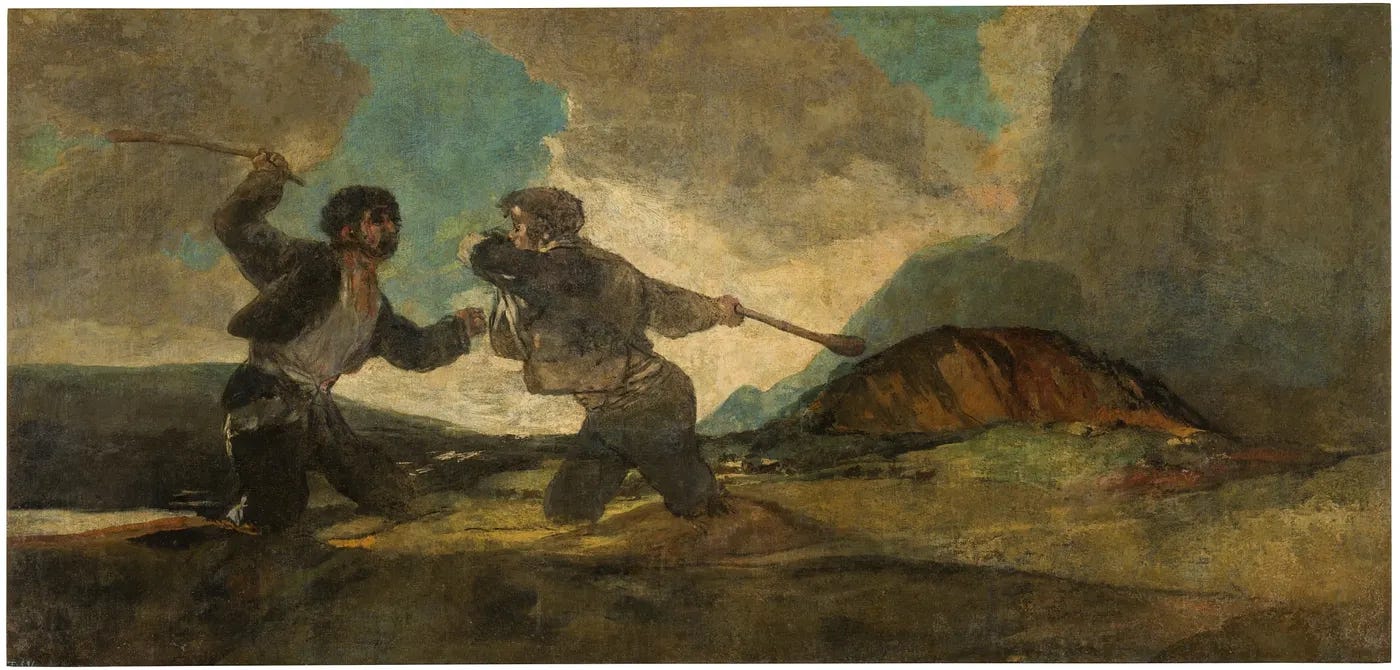
In this case, it was the freezing rain, the wind, the physical pain, the blizzard. It was me vs nature, and nature was kicking my ass.
Why do stories have conflict?
For starters, they’d be pretty boring without it. Conflict moves the plot forward and keeps the audience engaged.
But dramatists also use conflict because without it, there’s no reason for a character to change. There’s nothing to force a transformation.
The same is true in life. We don’t grow because of comfort or stasis. We grow because of adversity, because of conflict. Conflict gives us an opportunity to take action. To become the person the situation requires us to be in order to move forward.
That’s what I did on my road trip.
I used my phone to plot a new route, South to Kingman, Arizona, then East on I-40, running parallel with historic Route 66. The Mother Road, herself. I vowed two things. One, I was going to ride every last mile. Two, I was done camping out.
I got a cheap motel room in Kingman, picked up some Ibuprofen, a bag of Epsom salts, and a bottle of Maker’s Mark. After a good soak, a couple of healthy pours of bourbon in plastic hotel cups, and a good night’s sleep, I was reborn.
The rest of the trip was a wonder.
I rode through the Painted Desert and the Petrified Forest, feeling like a traveler on some alien planet. I saw trains moving across the horizon line, the whole thing in eyeshot, from locomotive to caboose. I saw wild horses, elk, and armadillo. I ate a pickle soaked in red Kool-Aid from a gas station on a Navajo reservation, and a steak at The Big Texan in Amarillo. I was deep in the marrow of America, taking it mile by mile, moment by moment.
Which is not to say that it wasn’t without its dangers. There were tornadoes ahead of and behind me in Oklahoma. One night in the hotel, I watched news footage of one blow over a semi on the same stretch of highway I’d been on two hours earlier.
Ten days after I left Los Angeles, I pulled up to my parents’ house in Ironton, where the whole family was waiting for me outside. My dad grilled steaks and I told stories from the road, about white-knuckling it through the rain over the Cajon Pass, the tent collapse in Vegas, the blizzard, the tornadoes, and the glories of the Mother Road.
In life, we often think that conflict means something has gone wrong. If we shift our perspective and look at it as a dramatist crafting the narrative of our life, we might see that conflict is where we took a big step forward.
People talk a lot about “seasons” of life these days. We don’t have any agency in a season. Seasons come and go, despite our actions. We endure seasons.
What if we thought in terms of scenes, instead? Scenes give us a chance to act. We have a part to play.
Divorce. A bad diagnosis. Job loss. Bankruptcy. Death of a loved one.
A scene with conflict is an opportunity for transformation.
What if, instead of asking ourselves, “Why is this happening to me,” we asked ourselves, “Who is this scene asking me to become in order to move forward?”
Once we know the answer, we can take action.
Next week: How to Solve Real World Problems Like a Writer
If you know someone who would enjoy this newsletter, please share it with them!
If you want to go a step further to support it, consider becoming a paid subscriber.
Weekly articles are free but a paid subscription will immediately unlock an article about How I Sold My First Two TV Shows. (And What I’m Doing Differently Today)
You made me want a Spyder and a small adventure of my own when I followed along with yours. I still think of you when I see one and wonder if I would have been brave enough to even ride to Lexington on one 😅